
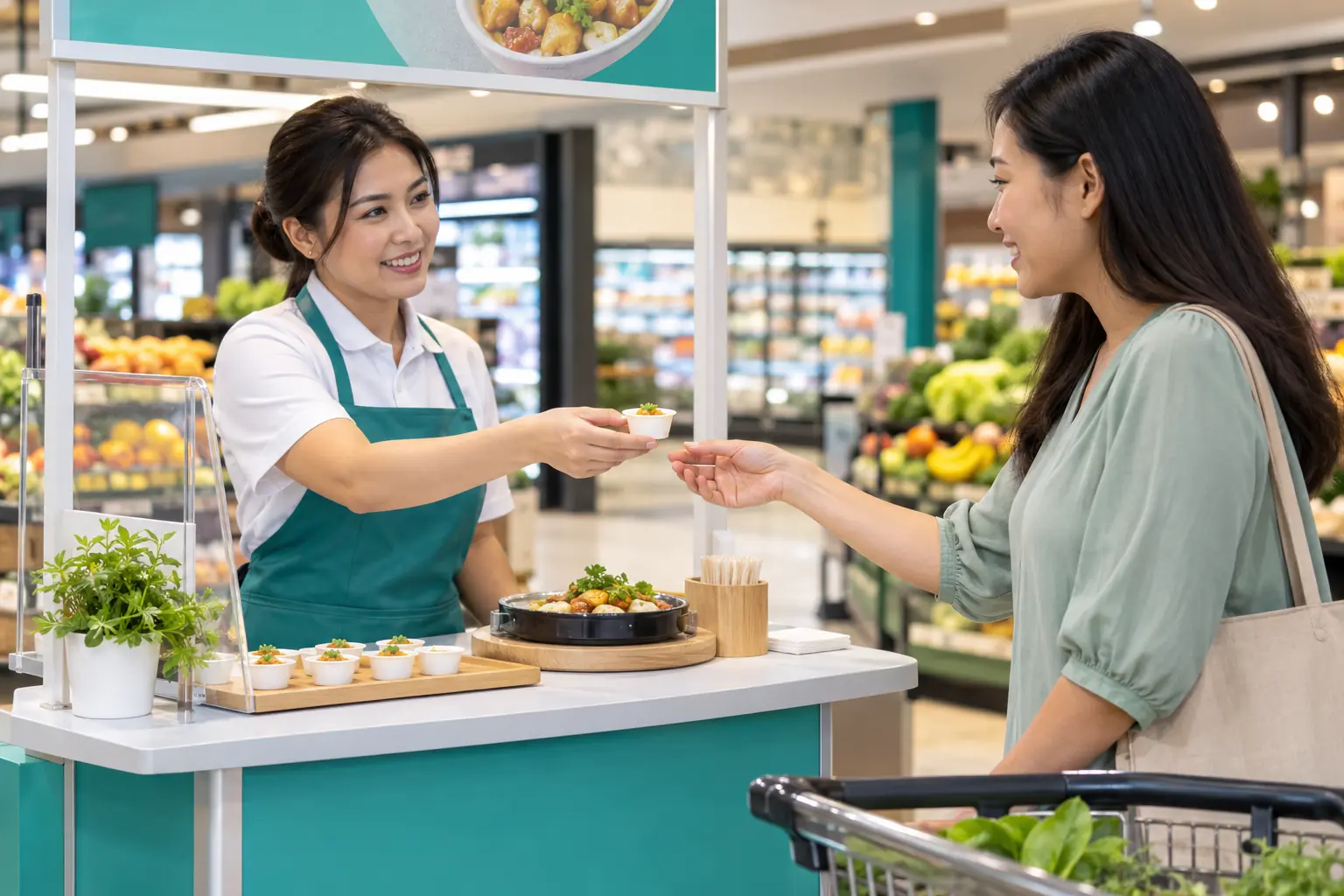
A sampling plan should explain who will try the product, where the interaction will happen and what the team should learn. Start with that objective before deciding on staffing or the number of samples to send.
Choose the outlet and interaction
Match the store format and activity hours to the intended audience. Confirm outlet approval, space, equipment and the permitted way to approach shoppers. Decide whether the activity is a tasting, product demonstration or take-home sample, because each requires a different operating brief.
Prepare stock and handling instructions
Set opening quantities, replenishment responsibility and a process for leftover or damaged samples. For food or products with handling requirements, use the brand’s approved preparation, storage and safety instructions and confirm retailer requirements before launch. Staff should know where to find ingredient or allergen information rather than improvise an answer.
Give promoters a usable brief
Cover the product explanation, approved claims, demonstration steps and common questions. Agree how attendance, breaks and problems will be reported. Provide a contact for stock shortages or equipment issues so the promoter does not need to resolve every operational question alone.
Measure the outcome without overstating it
Reconcile opening stock, samples received, samples distributed, losses and closing stock. Record relevant interactions and shopper feedback separately from sales. If sales are included, define the source and period; distributing a sample does not prove it generated a purchase. Use the review to adjust the next activity’s timing, quantities and briefing.
